
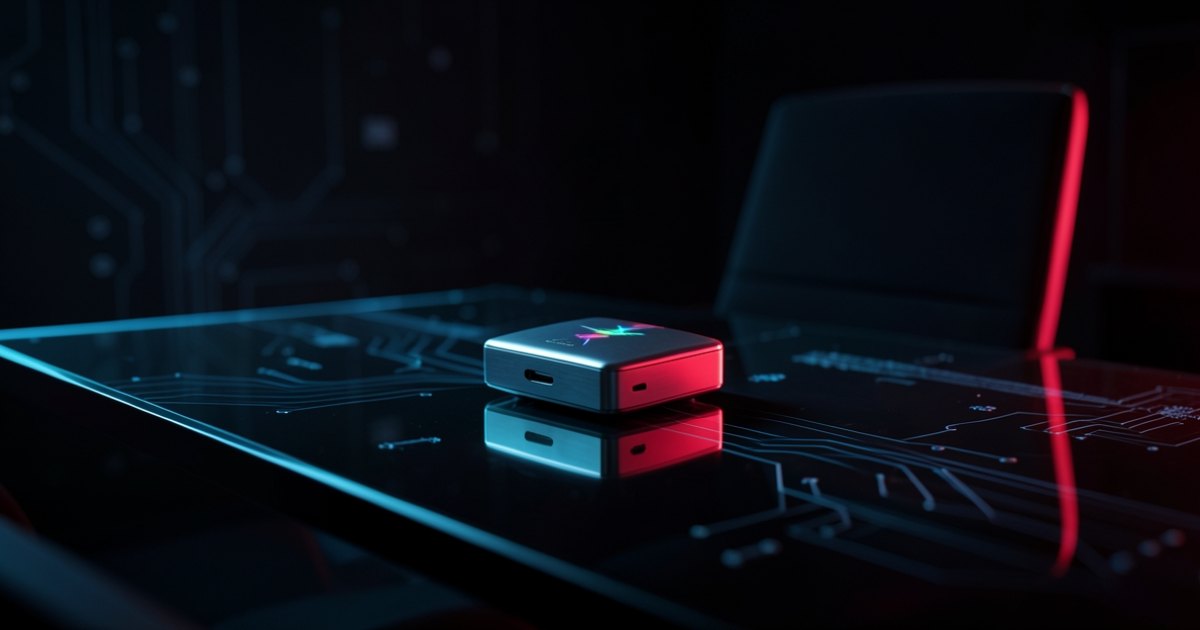
Abdulrahman Alfozan, a former OpenAI engineer accused of placing a hidden recorder in an executive meeting room, has pleaded not guilty in San Francisco federal court. The Hacker News reported on November 9, citing Bloomberg and CNBC, that he entered the plea on Friday; the case concerns an alleged attempt to capture confidential company conversations.
The information potentially at risk included OpenAI’s research, product plans and dealings with government and commercial partners, prosecutors said. Their allegations center on recording equipment inside the company’s San Francisco offices and an employee’s access to a room he was not authorized to enter.
Alfozan, a 35-year-old Saudi national, remains in custody without bail following his October 9, 2026, arrest, The Hacker News reported. A grand jury charged him in late October with one count of interception of oral communications. He is presumed innocent unless proven guilty.
How OpenAI found the devices
The U.S. Attorney’s Office for the Northern District of California disclosed the arrest on October 13, when the criminal complaint was unsealed and Alfozan made his initial court appearance. The complaint identified OpenAI as “Company 1” and said he had joined it as an engineer in July 2025.
The discovery preceded his arrest by more than a week. Around September 30, OpenAI staff found a recorder connected to a USB port behind a television in an executive conference room. It was hidden in toilet paper. OpenAI assessed that installation had occurred around September 28 and found that the device’s contents were encrypted.
Prosecutors described the room as a setting for discussions spanning proprietary research, business-development opportunities and product plans. Meetings also covered nonpublic technical progress, strategic decisions, capabilities, priorities, government engagements and commercial relationships.
The complaint linked Alfozan to the location through office surveillance footage. It allegedly showed him nearby on several occasions before staff discovered the recorder, despite his lack of authorization to enter the room or attend its meetings. Footage from October 5 allegedly showed him entering and appearing to inspect the space behind the television.
Security personnel found another device around October 5 after opening a bag left unattended in a different room at an OpenAI building. The complaint said the bag belonged to Alfozan and held his wallet and identification alongside a recorder resembling the one behind the television.
Meeting searches and chatbot prompts
Prosecutors also outlined digital activity they associated with the alleged preparations. Before September 28, Alfozan used a productivity tool to seek building addresses and details about meeting rooms, their capacities and calendars. His inquiries included the locations of leadership, executive and external partner meetings.
A separate set of prompts came from a chatbot account associated with his spouse. The complaint said that account shared several identifiers and attributes with Alfozan’s account.
Between September 24 and September 30, the spouse-associated account asked about constructing and modifying a recording device, installing it, recording audio, testing it, concealing it and accessing it remotely. Topics included continuous recording, changes to Wi-Fi connectivity, better audio and live listening, and encryption of an SD memory card.
Some questions were more specific: on September 27 and 28, the account referred to the discovered recorder’s custom header and unique MAC address, an identifier for a network interface. These were among the details prosecutors presented in connecting the online activity with the physical device.
Travel arrangements and the next hearing
The Hacker News also reported prosecutors’ account of the family’s travel plans. Alfozan’s arrest came three days before an October 12 departure booked for him, his wife and their son from San Francisco to Riyadh on one-way tickets.
After the arrest, his wife and son initially planned to depart for Jeddah on October 11 using a one-way ticket arranged and funded by the Saudi government, prosecutors said. That flight was canceled when a Saudi military member booked and paid for a business-class, one-way ticket to Doha for October 10. Prosecutors said the pair took that flight, leaving San Francisco roughly 36 hours after the arrest.
The publication described a later court filing alleging frequent WhatsApp contact between Alfozan and a member of the Saudi royal family. Court documents characterized him as a flight risk and alleged extensive efforts to build custom encrypted recorders for meetings involving senior OpenAI staff and executives.
The FBI investigated the case. Federal prosecutors and FBI officials characterized protection of the company’s sensitive technology as a national security concern; the prosecution is being handled by the district’s National Security, Cyber & Special Prosecutions Section.
For the alleged violation of 18 U.S.C. § 2511(1)(b), Alfozan faces up to five years in prison and a $250,000 fine, followed by three years of supervised release, if convicted. The court would determine any sentence under federal sentencing guidelines and the statutory factors in 18 U.S.C. § 3553.
His next hearing is scheduled for November 17, 2026.


